Updates & reader guide
Writing updates, answers to common questions, and background from the Echoes of Earth universe.
October 2026
Quick update: I'm half way through writing the first draft for Warth. I'm also working on getting the print version of Shadow ready.
January 2026
With Wrath of the Cerians well under way, I’ve decided that I have more story to tell before I wrap up the series. With that said, I believe I will write a 4th book that will bring everything to a close. The plot for this book hasn’t changed, it’s just been expanded and spilt into two books.
Echoes of Earth FAQ
What is the Echoes of Earth series about?
It is a character-driven science-fiction series set aboard starships and remote stations, exploring humanity’s encounter with an advanced civilization living beyond Earth Space.
How would you describe the tone of the series?
The books blend military science fiction, political tension, and personal drama, emphasizing duty, loyalty, and the weight of command.
Do I need to read the books in order?
Yes. Each novel builds upon the events, world-building, and character arcs established in the previous one. Starting with Rise of the Cerians, followed by Shadow of the Cerians.
Who are the Cerians?
They are humans who left Earth Space after a civil war. They developed differently, assisted by internal nanotechnology that shapes both their culture and capabilities.
Are these books heavy on technical detail?
They include realistic starship operations and scientific concepts, but the focus remains on story, character, and tension rather than dense technical exposition.
Do the books include romance?
Yes—romantic elements appear naturally within the narrative, adding emotional depth without overshadowing the larger story.
What themes does the series explore?
The books explore leadership, sacrifice, identity, trust, and the ethical implications of advanced technology.
What role does nanotechnology play in the universe?
Nanotechnology influences Cerian biology, culture, and strategy, serving as a core element of the world-building while raising questions about human limits.
Are there political undertones?
Yes. The series examines interstellar governance, military responsibility, and the delicate balance of power.
What kind of reader would enjoy this series?
Readers who appreciate thoughtful science fiction with rich character development, moral complexity, and high-stakes starship drama will find it engaging.
Does the story focus more on large-scale conflict or personal struggle?
It balances both, showcasing sweeping interstellar tension alongside intimate, character-driven moments.
Is the series action-heavy?
It features tactical engagements and high-pressure situations, but it also emphasizes strategy, investigation, and interpersonal dynamics.
Are new readers introduced gradually to the universe?
Yes. The world-building is structured so that readers learn alongside the characters, without overwhelming exposition.
How realistic is the science?
The technological concepts—such as propulsion, ship operations, and nanotech—are grounded in plausible extrapolation, though framed within a fictional setting.
Will more books follow?
Yes. The series is planned to continue, expanding the universe and deepening the overarching narrative.
EAF History Summary
Earth had become a pinnacle of civilization by the year 2150, but no one could have foreseen that just eight years later, the planet’s natural resources would be at an all-time low. So low, in fact, that world leaders were forced to look elsewhere to meet humanity’s ever-increasing demand for resources. Space became the only viable option. Mankind was forced to look to the heavens to survive. But it wasn’t until 2165 that this became practically possible.
The discovery of hyperspace led to several new technological breakthroughs. Humanity was no longer confined to a dying planet. Instead, people could now travel to distant planets and moons to extract the raw materials needed for Earth’s survival. Over the next thirty years, humans spread across the solar system in a mass effort to locate and gather resources.
In 2179, the first child was born off Earth—a milestone event. That same year marked a turning point, as more people began migrating into space. With this migration came pirates and criminals who targeted shipping lanes to fulfill their own agendas. These pirates operated outside any Earth-based government. It soon became clear that the centuries-old system of separate national governments could no longer maintain law and order in space.
In 2280, the major world powers united to form the Earth Alliance (EA). This new entity established laws and regulations to govern both Earth and space. Over the following decades, Earth’s former national governments were absorbed into the EA.
In 2285, hyper drives became logarithmic. That same year also saw the rise of a radical group opposed to the Earth Alliance’s existence. In 2287, these radicals launched what is now known as the Cerian War. The conflict lasted nearly ten years. By 2297, the radicals—now known as the Cerians—were driven out of Earth Space for good. Shortly thereafter, the Earth Space Force (ESF) was created to defend Earth and its solar system.
In 2299, the EA constructed the Neptune Border—a defensive perimeter of thousands of satellites placed in orbit around the Sun, just beyond Neptune’s orbit. These satellites formed a spherical detection grid that could alert nearby ESF ships to any unauthorized crossings. This innovation greatly enhanced the security of Earth’s solar system and forced the Cerians to take increasingly desperate actions to challenge the EA’s control.
And so began the rise of the Cerians.
Hyperspace and Hyper Drives
This section explains the use of hyperspace and hyper drives as it relates to this book. It is for reference only and, although it may contain some factual elements, it is a work of fiction.
Space is vast and spread out. Because of this, one must travel at speeds greater than light to reach distant locations. The speed of light is fast compared to, for instance, the speed of sound. But as fast as light is, it still takes a full eight minutes for it to reach Earth from the Sun. Since matter cannot travel at the speed of light, no manmade object can either.
In the year 2165, scientists discovered the existence of hyperspace. Hyperspace is not a speed, but rather a dimension that exists beyond our own plane of existence. Scientists soon discovered that they could create a distortion field around an object, allowing it to enter hyperspace. Upon entering hyperspace, an object could travel at speeds far greater than light. Furthermore, an object in hyperspace is forced to travel at a fixed speed of 395 billion mph. At that speed, an object could reach Alpha Centauri (the closest star to us) in two days—despite being 19 trillion miles away.
The distortion field, however, prevents the object from fully transitioning into hyperspace. This means the object remains subject to most of the laws of physics. For example, it can travel far faster than the speed of light and is not affected by gravity’s pull—allowing it to move in straight lines instead of using slingshot maneuvers. However, it cannot pass through solid matter (e.g., a planet), as it remains composed of physical matter.
So, an object attempting to travel from Earth to the Sun using hyperspace would be moving too fast to slow down and avoid collision. If the object were to drop out of hyperspace instantaneously, it would be destroyed by the violent transition from hyperspace to real space. This led scientists to invent logarithmic hyper drives.
Logarithmic hyper drives scale back the fixed hyperspace speed at an exponential rate. On a scale from 0 to 100 (with 100 representing 395 billion mph), each unit changes by a factor of 3.95 billion mph. Thus, a ship using only one percent of its hyper drive would be traveling at 3.95 billion mph, while a ship using one hundred percent would travel at the full 395 billion mph. Additionally, a ship cannot enter hyperspace at zero percent power. Therefore, the slowest a ship can travel in hyperspace is 3.95 billion mph.
Moreover, a ship requires an equal number of hyper drives to generate a stable distortion field. This is why all ESF ships have two hyper drives located on opposite sides of the vessel. A hyper drive must be exposed on both ends to produce the field. The drive must be centered within the field to sustain it; since this is impossible aboard a ship, two hyper drives are necessary to maintain balance. A single drive would cause the field to collapse as it attempts to re-center itself.
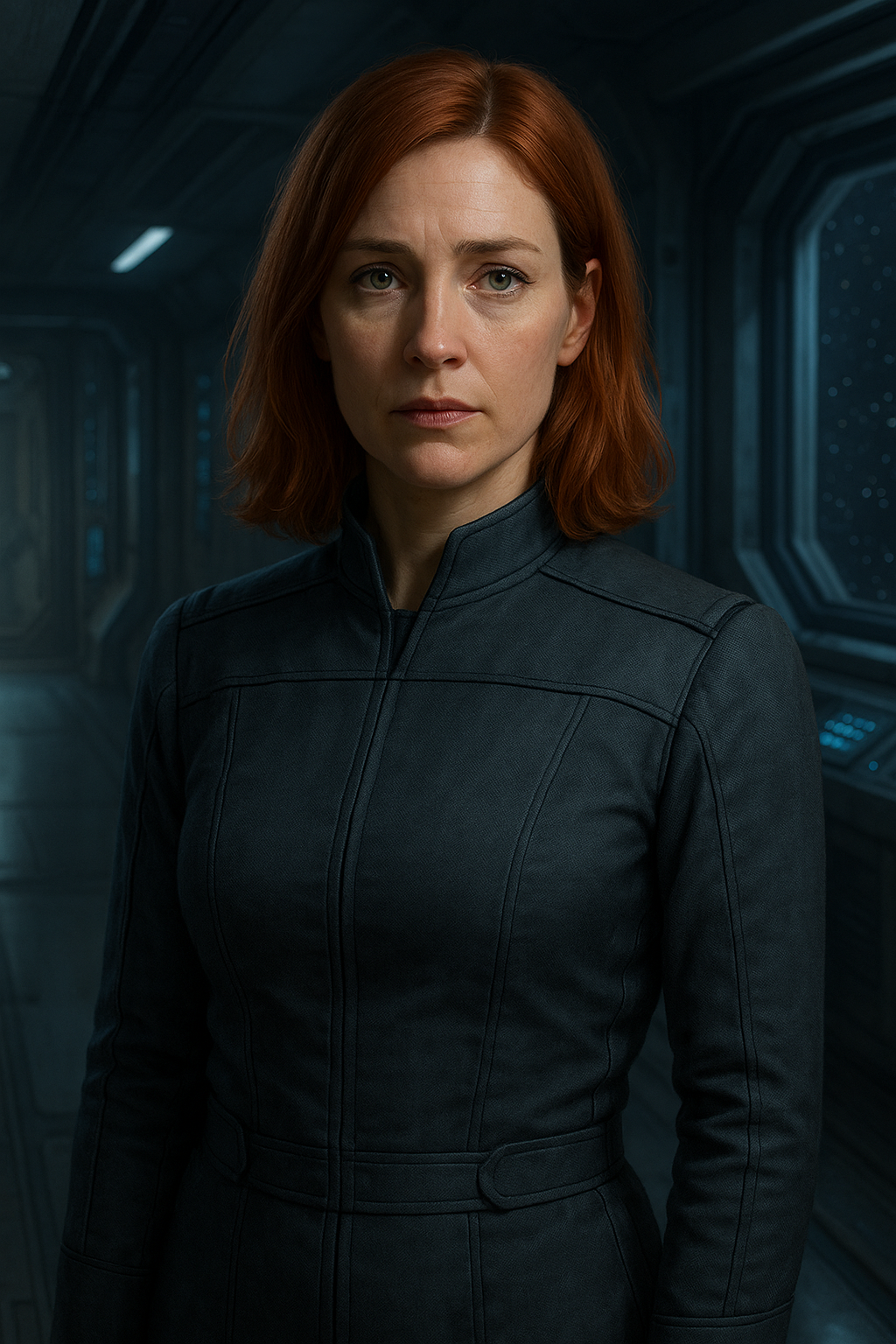
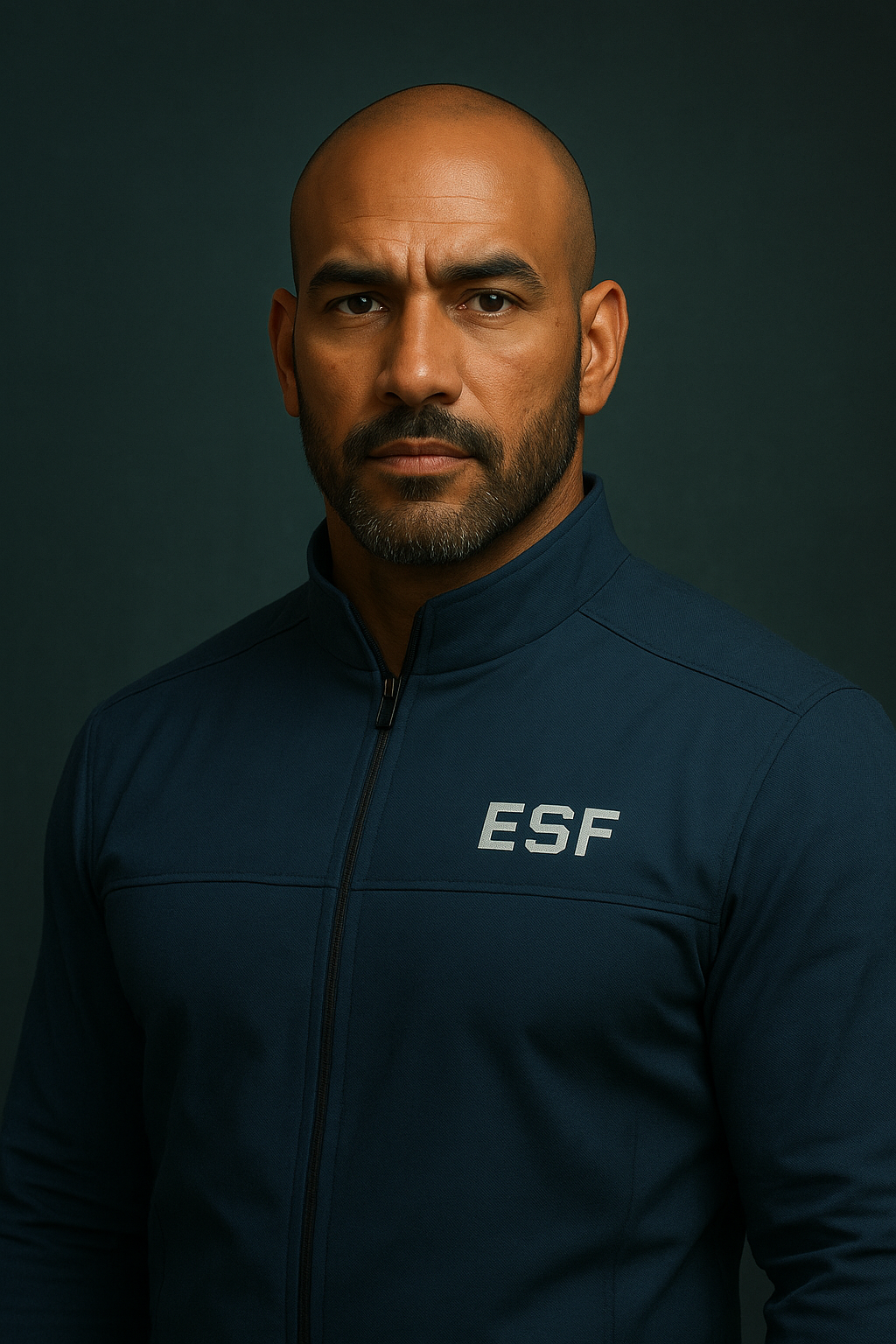
Faces of Earth Space
Scroll through all seven portraits.
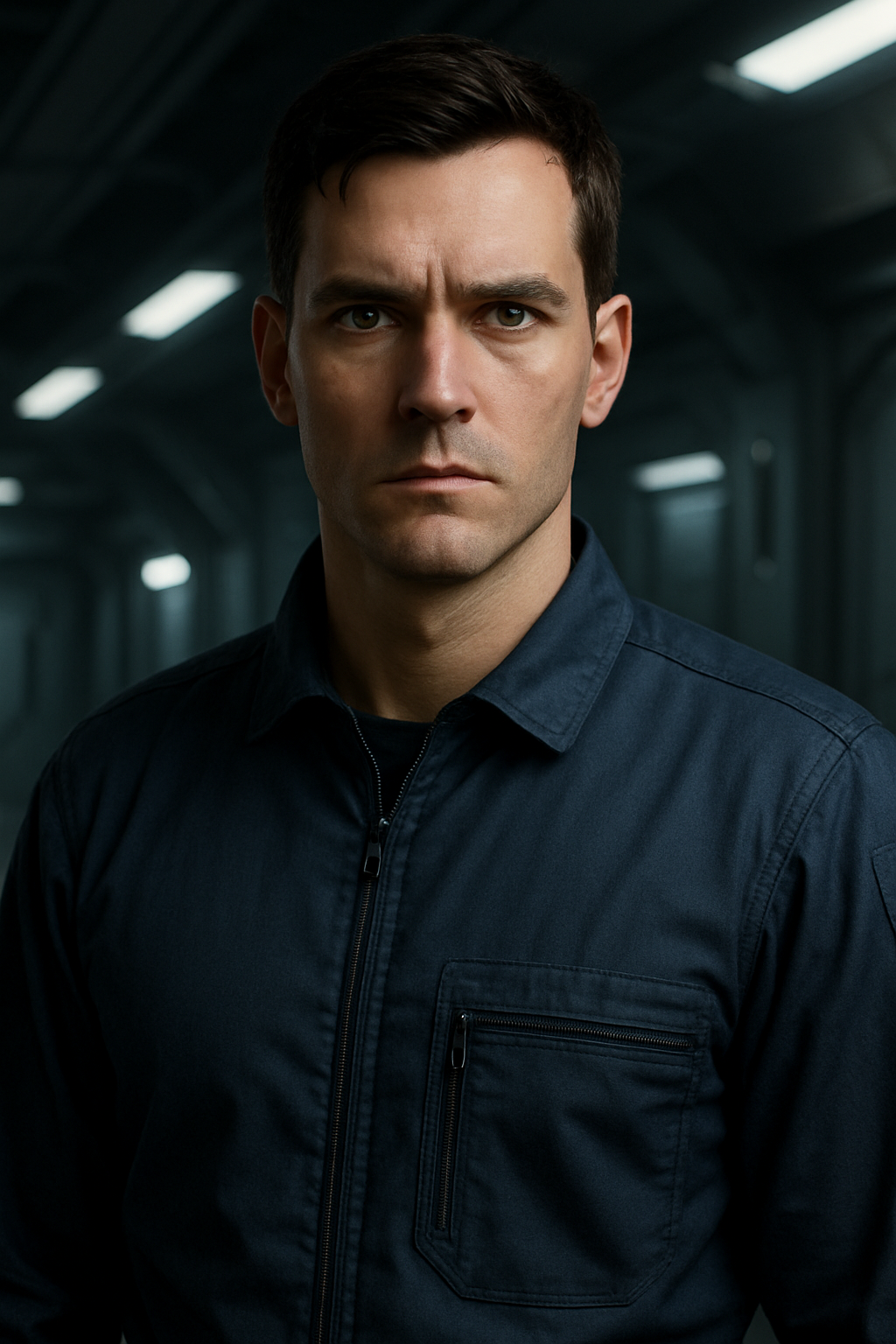
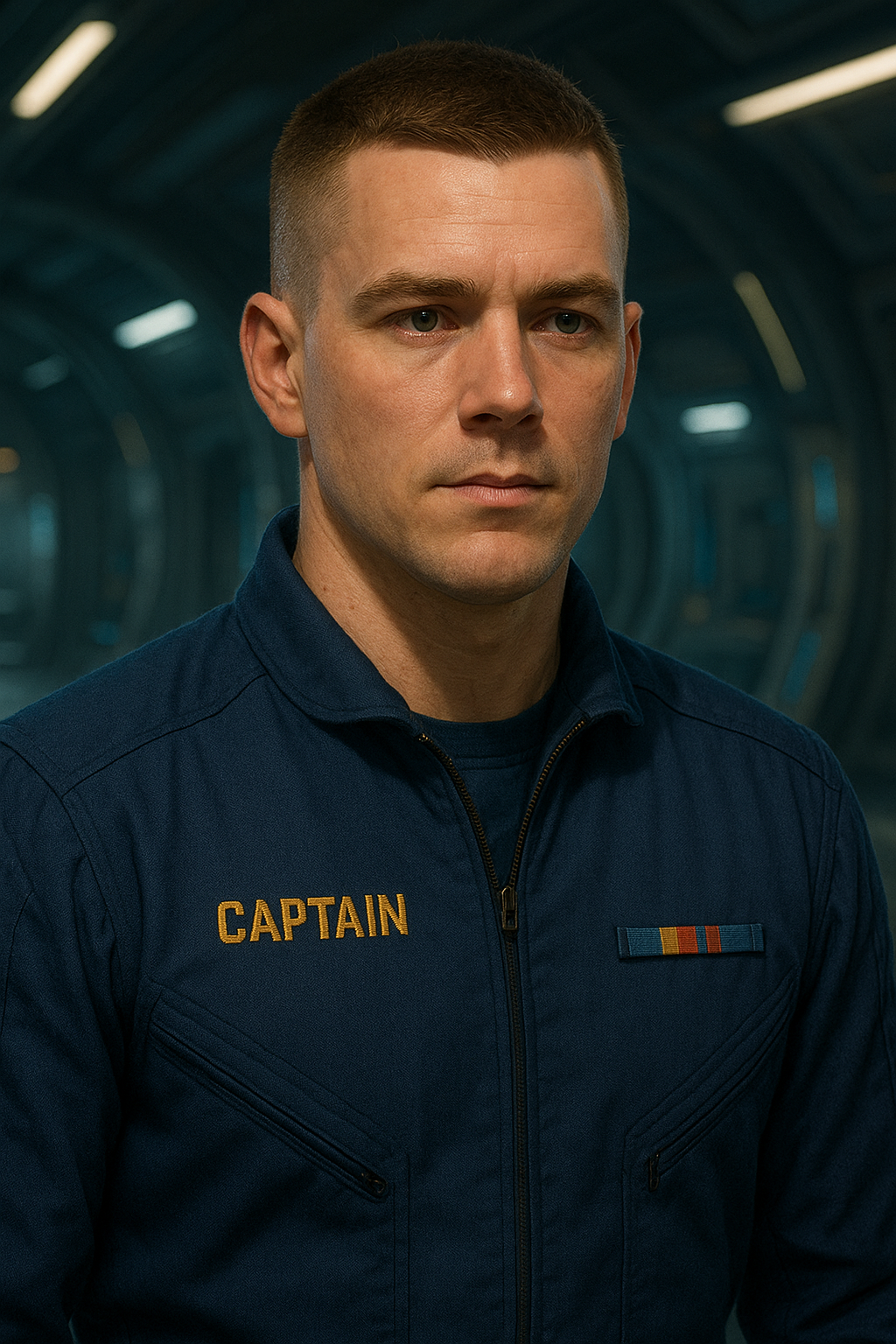
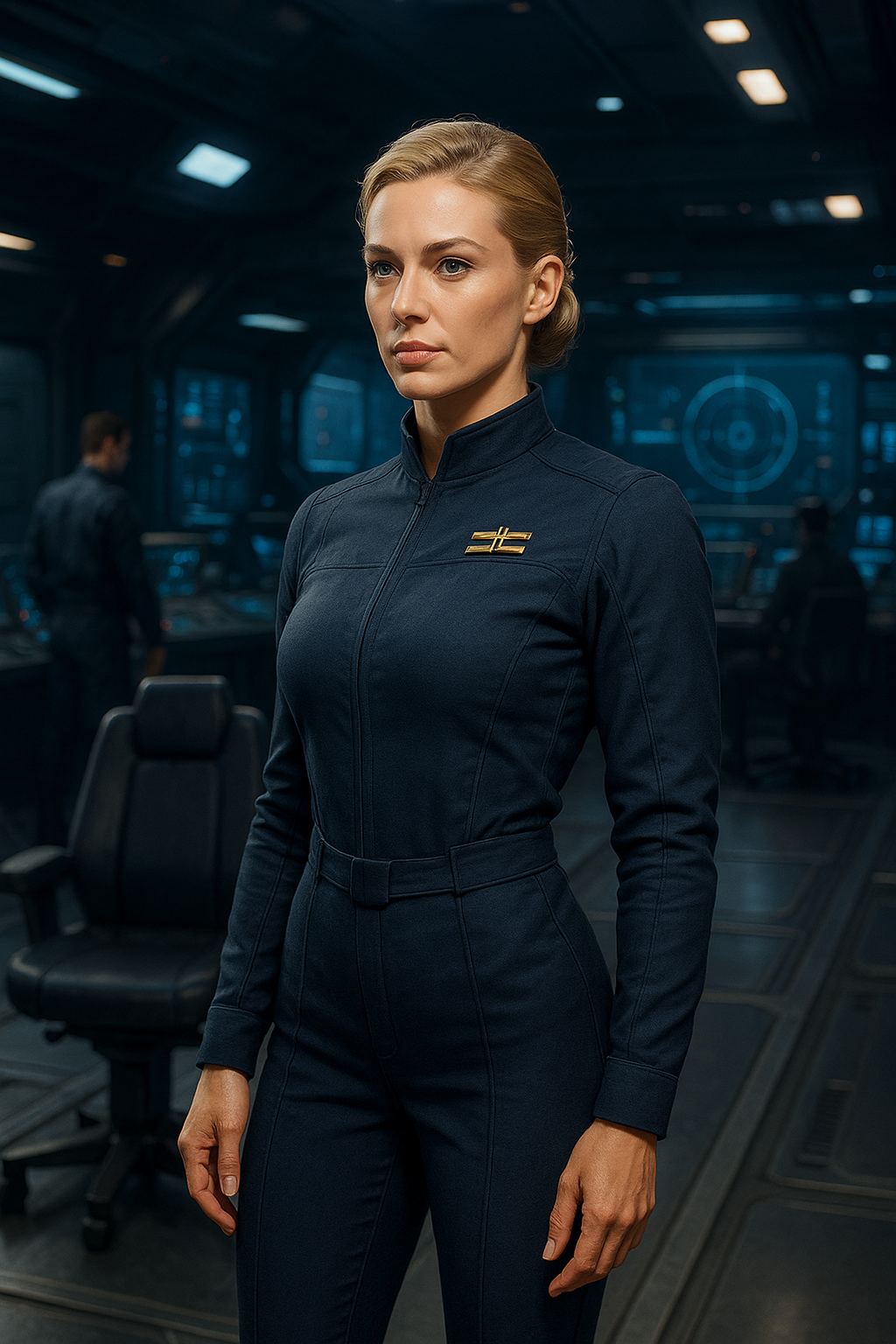
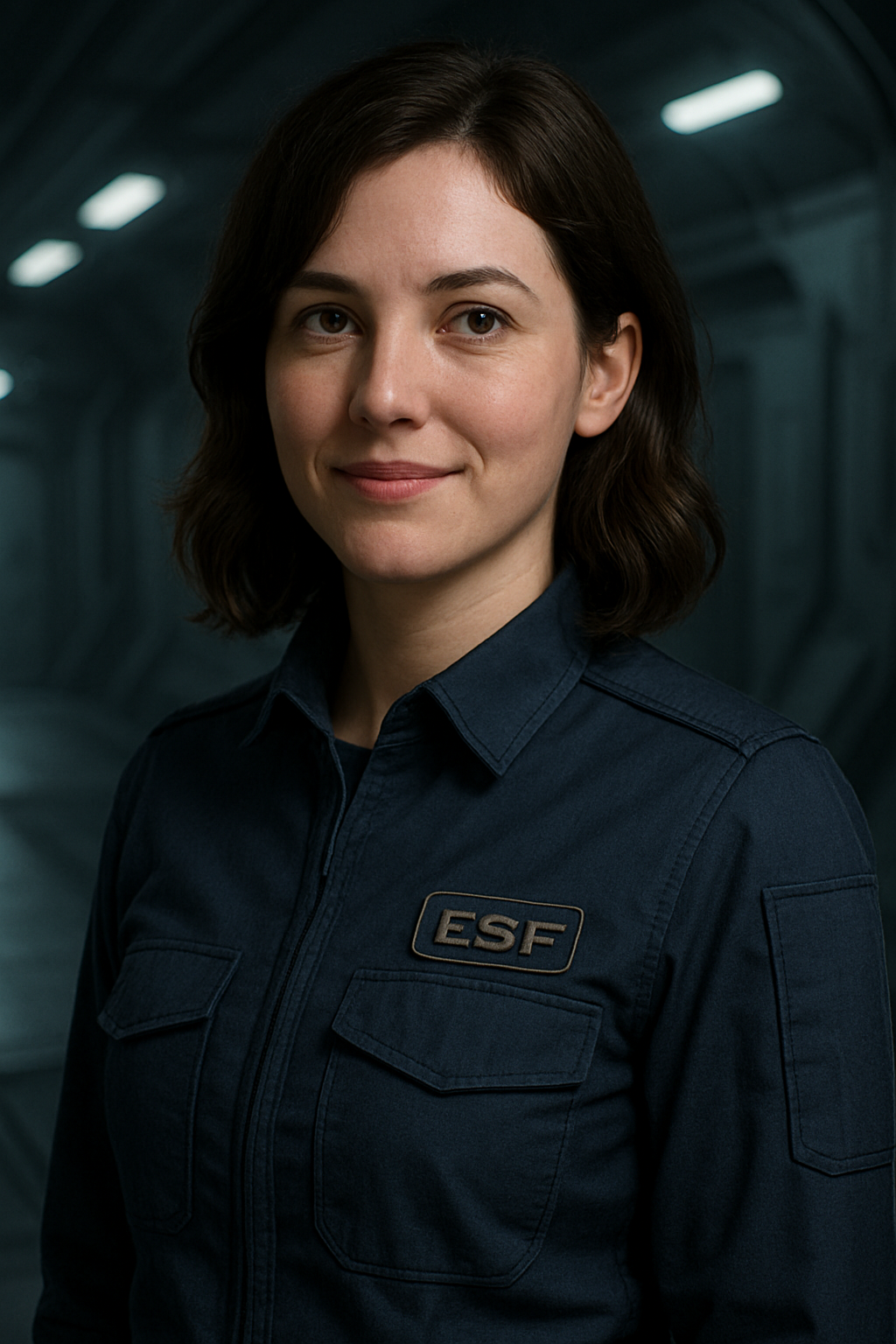

Character FAQ
Open a question below to reveal character information.
Who is Captain Samual “Sam” Keys?
He is the commanding officer of the ESF Blackwood, known for calm leadership, principled decision-making, and unwavering loyalty to his crew. Keys is defined by discipline, integrity, and a steady emotional core that anchors those around him.
Who is Captain Jonathan “Jon” Robertson?
He commands the ESF Niagara and is recognized for his analytical mind, measured judgment, and professionalism. Robertson maintains a thoughtful, composed presence even under extreme pressure.
Who is Commander Savanna Robertson?
She is the First Officer of the Blackwood, a disciplined, athletic, and sharp-minded leader who maintains operational excellence aboard the ship. Her composure and tactical insight make her indispensable to the command staff.
Who is Commander Jeffery Thomas?
He serves as First Officer of the ESF Niagara, known for dedication, precision, and the reliability expected of a senior executive officer. His professionalism and commitment strengthen the ship’s command structure.
Who is Lieutenant Lindsey Thomas?
She is the Niagara’s Chief Tactical Officer. Skilled, decisive, and composed, she manages the ship’s defensive and offensive capabilities with expert efficiency.
Who is Lieutenant April Hughes?
April is a helm officer aboard the Blackwood, characterized by technical aptitude, quick reflexes, and a warm, steady presence. Her skill ensures the ship performs with precision even in high-risk situations.
Who is Lieutenant Commander Lance King?
Lance is an engineering officer assigned to Station 47. Tall, slender, and technically skilled, he contributes his expertise to station operations within the wider Earth Space Fleet.
Who is Allison Knight?
Allison is a central civilian figure connected to several key characters. Intelligent, resourceful, and resilient, she holds a meaningful place in the emotional and narrative framework of the series.
Who is Lieutenant Commander Terrance Davis?
He is the Blackwood’s Second Officer, valued for his reliable oversight, structured thinking, and dependable execution of command responsibilities.
Who is Lieutenant Commander John Mitchell?
Mitchell serves as the Blackwood’s Chief Tactical Officer. Focused and analytical, he is responsible for coordinating weapons, shields, and tactical strategy during critical operations.
Who is Lieutenant Commander Mike Davenport?
Davenport is the Chief Engineer aboard the Blackwood. Practical, innovative, and unflappable, he maintains the ship’s systems and ensures peak performance through technical expertise.
Who is Lieutenant Commander Asha Malik?
She is the Niagara’s Chief Science Officer. Intelligent, methodical, and curious, she directs scientific analysis, research, and sensor operations.
Who is Lieutenant Commander Grant Kelley?
Kelley is the Chief Engineer of the Niagara, recognized for his engineering precision, solution-oriented mindset, and steady performance under demanding circumstances.
Who is Dr. Maren Holly?
She is the Chief Medical Officer of the Blackwood, known for calm competence, quiet wit, and steady judgment. Dr. Holly provides medical leadership and is widely respected by the crew.
Who is Dr. Elara Voss?
Dr. Voss serves as the Niagara’s ship counselor. Professional, thoughtful, and good-humored, she supports crew mental wellbeing and provides guidance during moments of emotional strain.
Who is Shantalle?
Shantalle is a powerful and influential figure within the Cerian world, distinguished by his intelligence and extensive use of nanotechnology and cybernetic enhancements. He embodies the complexity and depth of Cerian society.
Who is Fleet Captain Holloway?
He is a senior Earth Space Fleet officer known for strict discipline, strategic oversight, and maintaining order across multiple commands.
Who is Fleet Admiral Anderson?
Fleet Admiral Anderson leads high-level military operations within Earth Space. He is decisive, authoritative, and central to the fleet’s strategic direction.